Ask the county for the permit and as-built drawing, find out whether your county requires an evaluation at sale (Wayne outside Detroit, per the county's own description, Macomb, Washtenaw, Ottawa, Ingham and Shiawassee do, and Grand Traverse does for dwellings within 300 feet of surface water), and get a written pump and inspection record. Michigan's Seller's Disclosure Statement asks about septic tanks and drain fields only 'if known', so it does not replace an inspection.
Start with what the seller signs and what the county holds
Michigan’s statutory Seller’s Disclosure Statement asks the seller to describe the condition of the septic tanks and drain fields, if known, and to answer a parallel question about wells. That is a statement of what the seller knows, not an inspection. Treat it as a prompt for questions to put to the seller.
The record that matters is at the county. EPA says the local permitting authority, usually the local health or environmental department, holds the permit and the as-built drawing, and a copy tells you where the tank, the drain field and the reserve area lie. Counties differ in how they release it. Genesee County provides septic and well records on written request for $5 an address, takes up to five business days, and warns that records are not available for every property. Grand Traverse County charges $20 per parcel for a records search and copies. Jackson County says well and septic records after 1972 should be on file, and Marquette County offers a free online records search. Livingston County has searchable records from 2018 on, and Bay County publishes a public septic system map. Ask for the file before you decide whether the offer needs a septic contingency.
Whether your county requires an evaluation at sale
In some counties the answer is yes and you have no choice. Five of the 15 most populous counties require an evaluation before a sale closes: Wayne outside Detroit, Macomb, Washtenaw, Ottawa and Ingham. Shiawassee County does too, and Grand Traverse County does when a dwelling is within 300 feet of surface water. The county-by-county guide has the table. Livingston and Jackson counties say they have no such rule. Elsewhere we can cite none in the published text, which does not mean none exists. Call the health department and ask about the address.
When no rule applies, loan evaluations and private inspections fill the gap
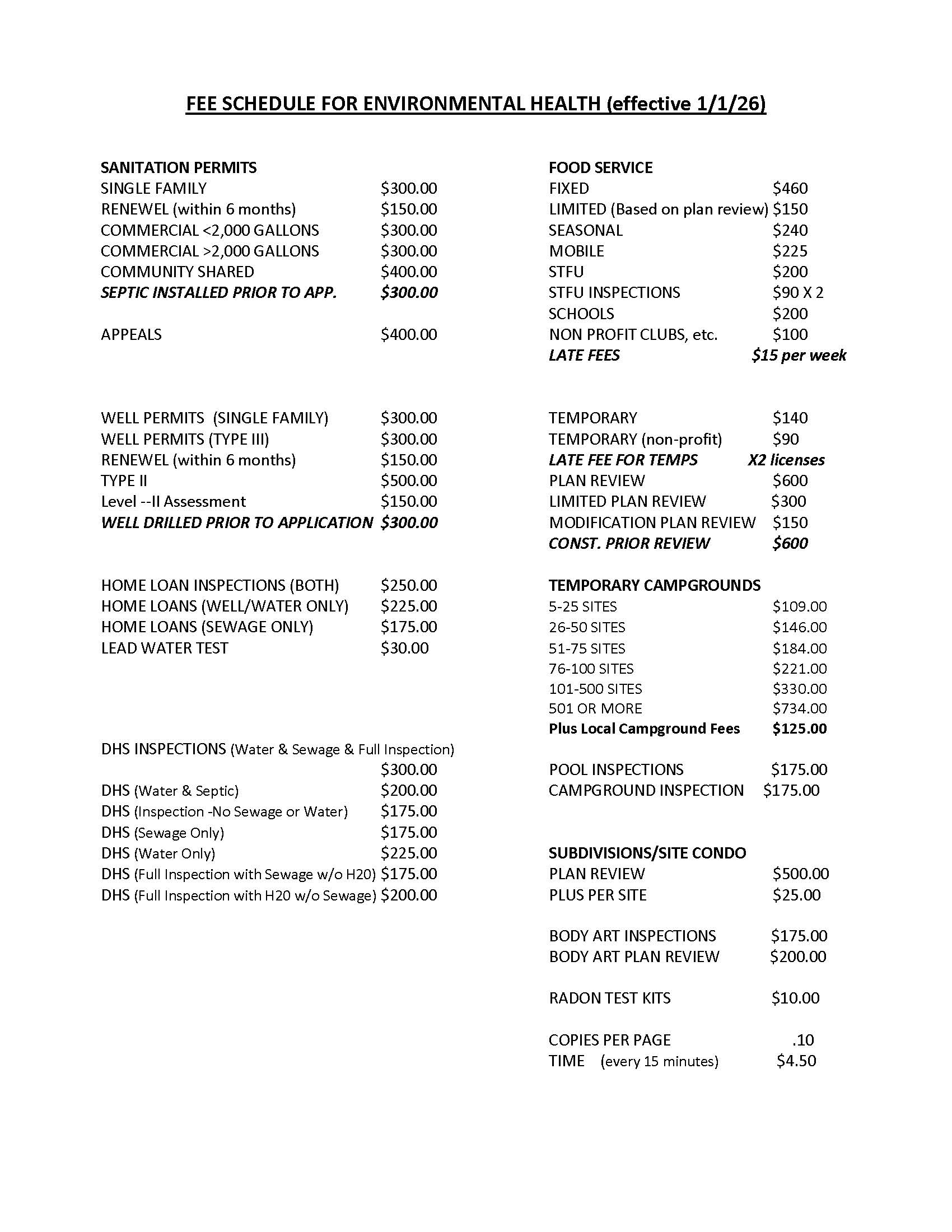
Several counties that do not require an evaluation still offer one for buyers and lenders, and a lender may ask for it. Saginaw County’s mortgage or performance evaluation costs $440 for the septic alone, and the county says it does not require the health department to perform these evaluations. Bay County’s loan evaluation of a sewage system costs $251 and requires a septage hauler on site to pump the tank at inspection. Van Buren/Cass District Health Department offers home loan inspections, $175 for sewage only. Mid-Michigan District Health Department, which covers Montcalm and Clinton counties, offers a septic evaluation for mortgages at $220 and wants the tank pumped and a pump card on file before it releases the report. Muskegon County’s septic evaluation is $150 and described as desirable for buyers. These county fees come from published schedules, but private inspectors set their own prices, which we have not collected.
What a good evaluation should cover
Use EGLE’s yearly owner checklist as the minimum: open and inspect all tanks, check scum and sludge, clean the effluent filter, test the alarm and pump on a system that has one, walk the drain field and check the inspection ports for standing water. For the sludge test, use EPA’s depth measurements. Ask for the written record in the form EGLE uses for its loan program, and see the receipt guide for the lines. Some county evaluations include pumping, which means you also learn what the tank looked like when it was empty. Saginaw County’s does, for instance, and for older systems installed without a permit it requires all four drain field corners to be uncovered.
Age, parts and the money you may need
EGLE says a conventional system lasts about 25 to 40 years, and EPA says a drain field more than 25 to 30 years old can develop a thickened biomat and that you should plan an upgrade. EPA puts pumps and controls at 10 to 20 years. Ask the age of each part, not only the house, and ask for the dates of the last pump replacement and of any permit for repairs, because the county file and the receipts together tell you more than either alone. For a rough budget, EPA gives $250 to $500 for routine maintenance every three to five years and $5,000 to $15,000 to repair or replace a malfunctioning conventional system, and EGLE says replacement systems cost $8,000 to $30,000. If a failing system turns up, EGLE and Michigan Saves lend up to $50,000 for failing or near-failing systems, with the failure documented by the local health department. The loan guide explains how.
Questions to put to the seller
Start with when the tank was last pumped and by whom, and ask for the receipts. Find out if the system has ever backed up, if an alarm has sounded, and what was done about it. Check if any addition, deck or outbuilding went up after the system was installed, and if the county signed off. Confirm that the lids are at ground level and who is responsible for the access. Put the answers in writing in the purchase agreement or an addendum, because a verbal answer disappears at closing. If the seller does not know, that is information too, and it is a reason to order the evaluation before you remove contingencies.
If you plan to add a bedroom, a pool or a pole barn
County rules reach past the closing. Livingston County requires a site review for additions and modifications on well and septic properties, including decks and pole barns. Jackson County requires a change of use review for adding a bedroom or changing residential use to commercial. Monroe County says additions, pools and outbuildings may need Environmental Health approval for distance to the septic and well before a building permit. Ottawa County requires a site to have a reserve area for a replacement system at least equal to the first. Ask the county what room the system leaves you before you plan a project, and whether a public sewer is likely to reach the street. Keep what you learn in one folder with the pump records, because the next buyer will ask you the same questions.
Questions people ask
Are septic tank locations public record?
Not as one statewide record. EPA says the local permitting authority usually holds the permit and as-built drawing, and counties charge different fees and set different rules for copies.
Does Michigan require a septic inspection when buying a house?
Not statewide. Counties such as Wayne outside Detroit, Macomb, Washtenaw, Ottawa and Ingham require an evaluation before closing, and others do not.
Who pays for septic inspection when buying a house?
In the counties that require one, the seller arranges the evaluation. Otherwise it is a negotiation, and lenders may ask for one.
What should I budget for a failing septic system?
EPA says $5,000 to $15,000 to repair or replace a conventional system, and EGLE says replacement systems cost $8,000 to $30,000. Loans of up to $50,000 are available for failing systems.
- MCL 565.957 (Seller Disclosure Act form)
- EPA: Frequent Questions about Septic Systems
- EGLE FAQ: Septic systems
- EPA: How to Care for Your Septic System
- Septic: GCHD Environmental Health Program
- 2026 Time of Transfer Fee Schedule (PDF)
- Well & Septic Information
- Property Records Search for Well and Septic
- Livingston County Sanitary Code (PDF)
- Well and Septic Information
- Wayne County Septic/Onsite Sewage page (waynecountymi.gov) Confirm with the source before you rely on it.
- Property transfer regulation - Macomb County
- Regulation for the Inspection of Residential Onsite Water and Sewage Disposal Systems at Time of Property Transfer (Washtenaw)
- County of Ottawa Environmental Health Regulations (PDF), Art. XIII
- A Guide to Transferring Property in Ingham County
- Shiawassee County Ordinance 01-07-26 (time of transfer)
- GT County time-of-transfer regulation (PDF)
- Realtor Resources - Livingston County
- Mortgage & Performance Evaluations
- SCHD Environmental Health Fees
- 2026 Environmental Health Fee Schedule
- Fee Schedule for Environmental Health (effective 1/1/26)
- Water & Septic (VBCDHD) Confirm with the source before you rely on it.
- Loan Eval instructions and application (Rev. 10/2026) Confirm with the source before you rely on it.
- MMDHD Fee Schedule FY 2026-27
- Muskegon County: Septic Permits & Evaluations
- Public Health – Muskegon County: 2026 Environmental Quality Fee Schedule
- EPA: Why Maintain Your Septic System
- EGLE news release, July 29 2025
- EGLE news release, May 22 2024
- EGLE: SRLP Program Minimum Standards (August 2026)
- Septic Services - Livingston County
- Onsite Sewage Disposal
- EGLE form EQP1731 (Rev. 05/2025): Septic Replacement Loan Program Septic Tank Pump Record
Cost figures are estimates, not quotes. Rules and prices change: confirm with your local building department and ask any septic contractor for the license number. We are a referral service, not a septic contractor. How we check.
Request sent
We passed your job request to one septic service company that works your area.
- 1The company, or a referral partner acting for it, calls the number you gave.
- 2You agree the job and the price with the company, in writing.
- 3If you do not hear from a company, tell us through the contact page.
- Find the tank lid, or ask the county for the as-built drawing.
- Clear a path for the truck to within hose reach.
- Note the tank size and the date of the last pumping if you know them.
- Ask for the sludge depth and the condition of the baffles on the receipt.